AI Patient portal for organizing and understanding healthcare data
Timeline
8 Weeks (Nov - Dec 2025)
Scope
Product Designer
Tools
Figma, Adobe Creative Suite, ChatGPT, Midjourney
Details
Micheal French (Product Designer)
Early insights
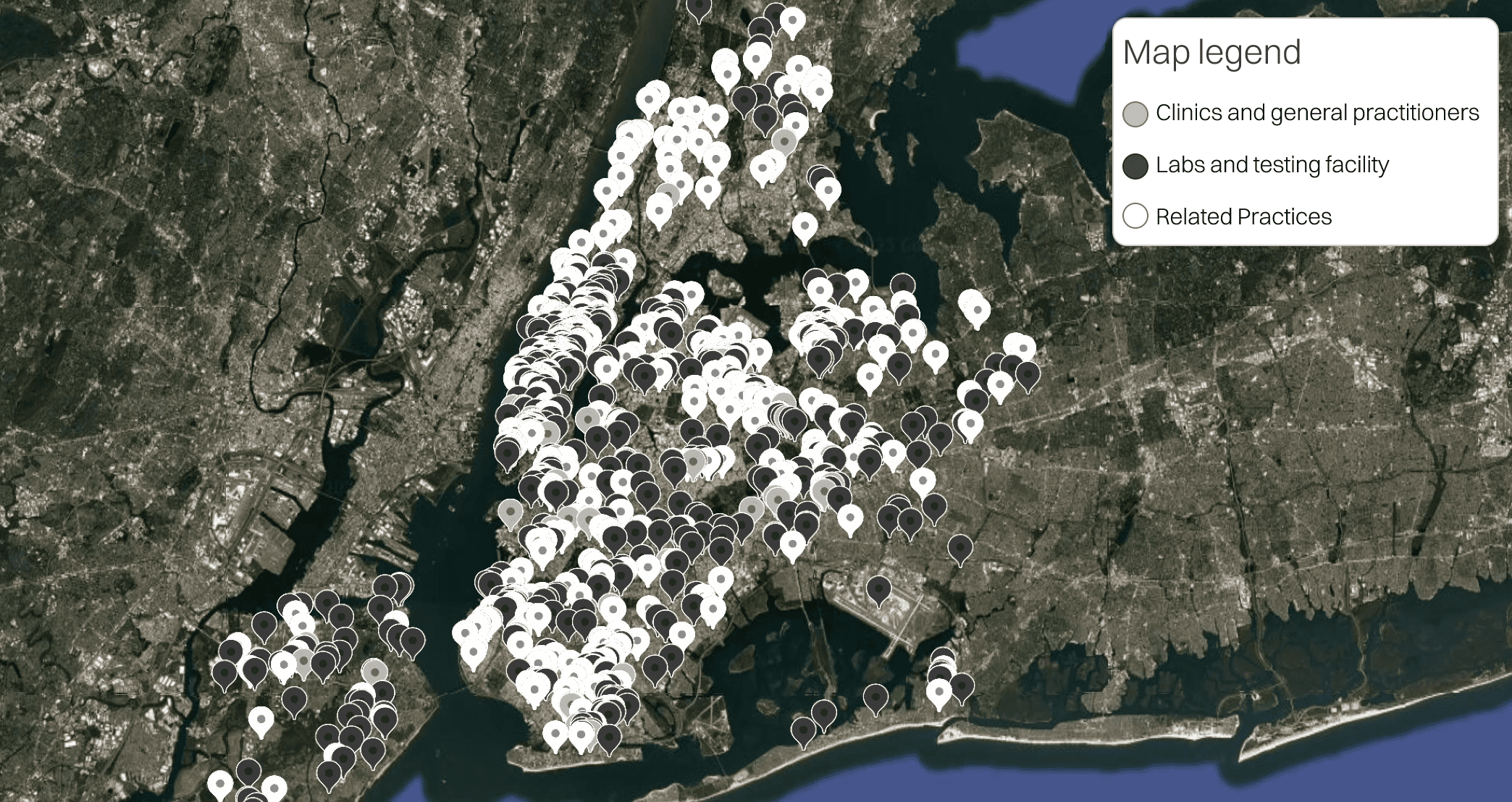
To ground the project, we started by mapping the local healthcare landscape in New York and the surrounding areas. This included clinics, general practitioners, labs, and related healthcare practices. These services often operate independently, each with its own records and portals. This map helps illustrate how fragmented the healthcare experience is today, with patient data spread across many isolated systems.
Market research
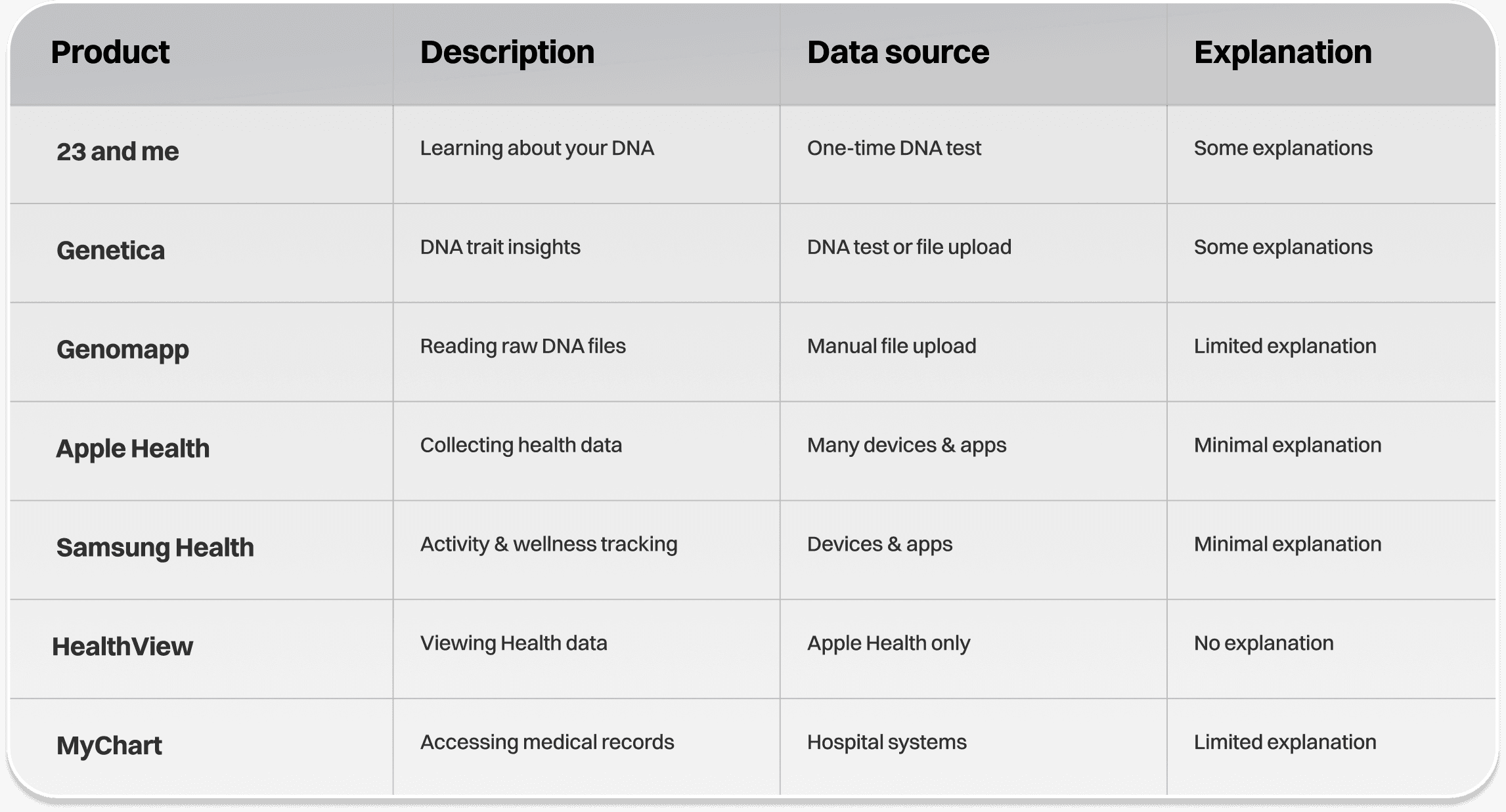
Patient portal for organizing and understanding healthcare data bringing together medical records, lab results, wearable data, and self-reported inputs into a single system.
Research signals
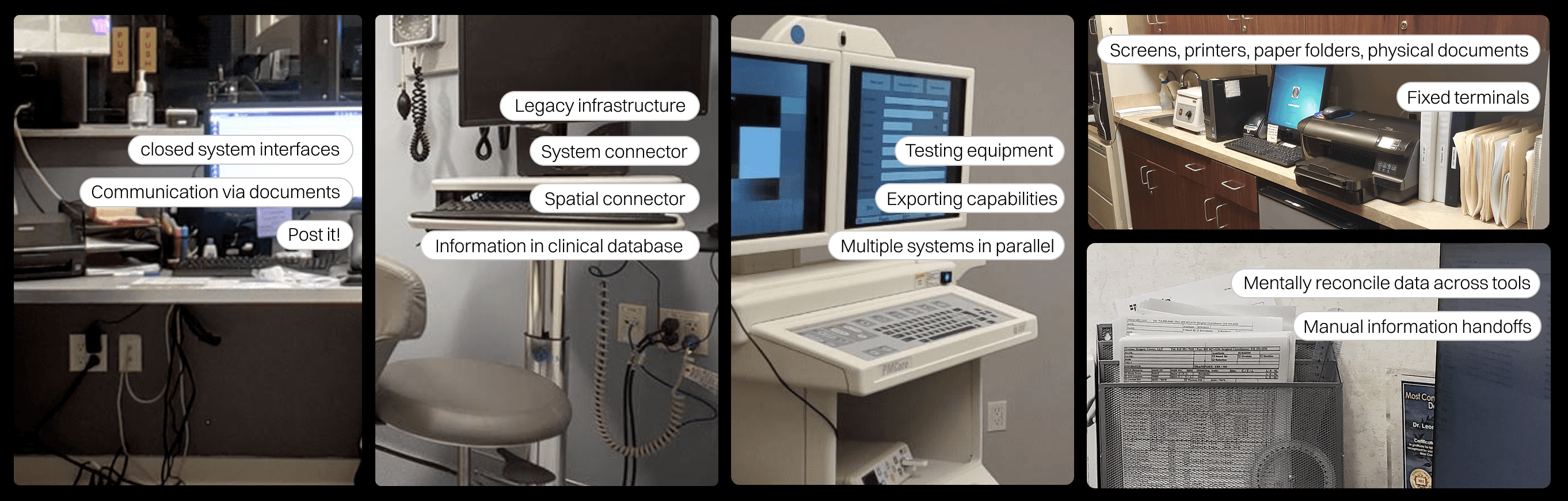
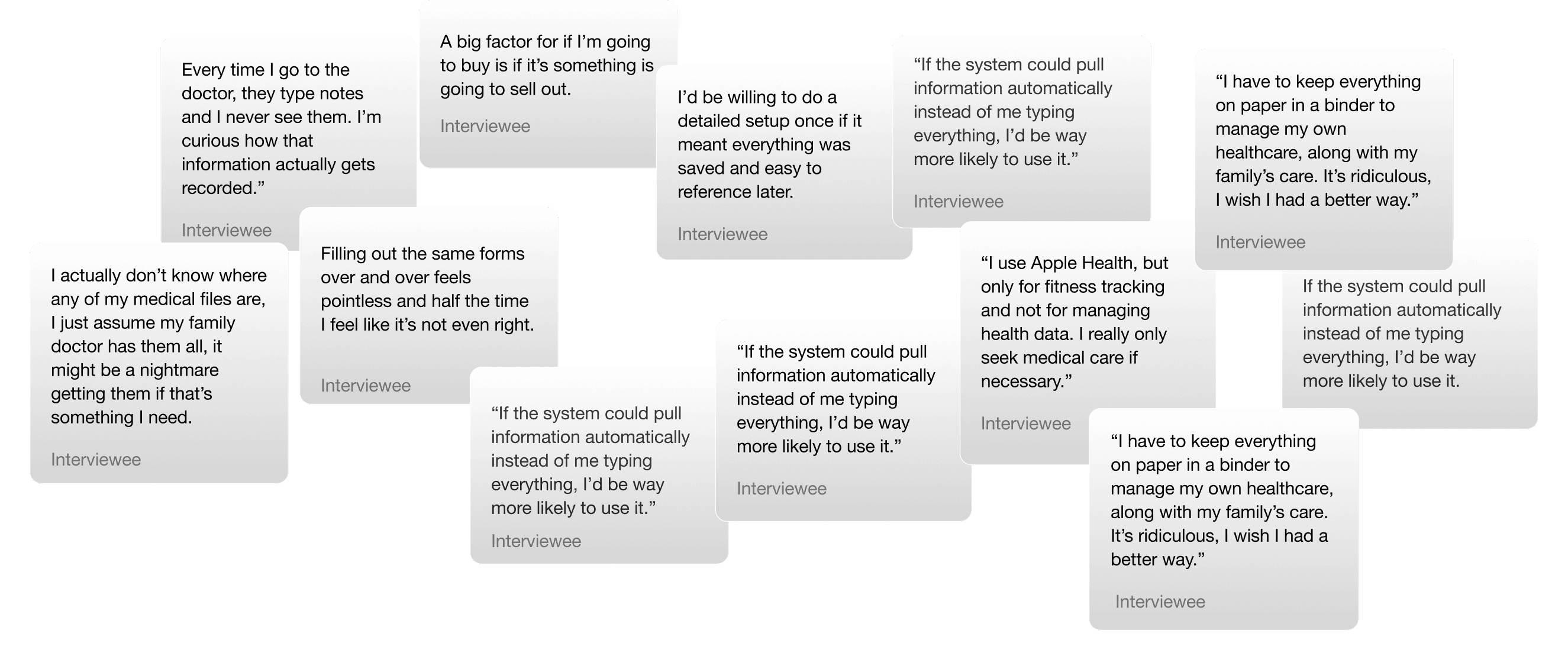
Through interviews with everyday patients, individuals managing chronic conditions, and healthcare professionals including doctors and nurses, consistent patterns emerged around how health information is accessed and used. Our research circulated the themes of data inputs and AI in healthcare. Patients described relying on multiple portals, emails, and personal notes to keep track of their care, while clinicians noted limited visibility into data generated outside their own systems. Across all groups, the lack of a shared, centralized view of health information made it harder to track history, identify patterns, and have informed conversations during care visits.
Research synthesize
Users manage their health using multiple disconnected systems that do not communicate with each other. As a result, important information is hard to find, difficult to understand, and easy to forget. This makes it challenging for individuals to track changes over time or prepare for conversations with healthcare providers.

Problem definition
Users manage their health using multiple disconnected systems that do not communicate with each other. As a result, important information is hard to find, difficult to understand, and easy to forget. This makes it challenging for individuals to track changes over time or prepare for conversations with healthcare providers.
How might we
How might we centralize health data into a single, accessible system that makes complex information easier to understand while allowing users to customize how their data is viewed and shared based on their individual needs?
Site map
How might we centralize health data into a single, accessible system that makes complex information easier to understand while allowing users to customize how their data is viewed and shared based on their individual needs?

Sketches
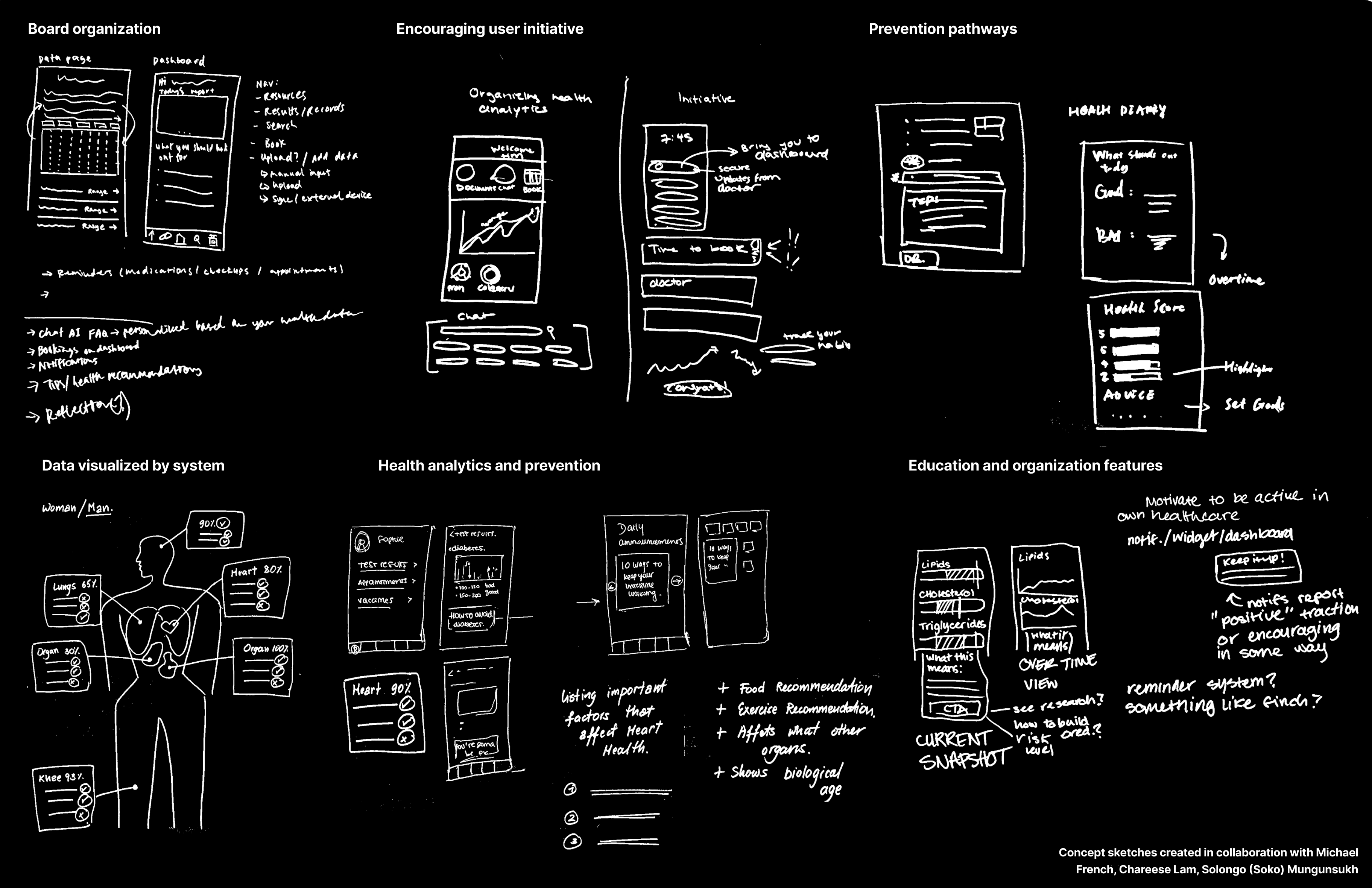
Low-fidelity sketches were used to define key flows such as onboarding, data connection, and record review. This helped identify navigation needs and content hierarchy before moving into higher-fidelity designs.
Lofi Prototypes
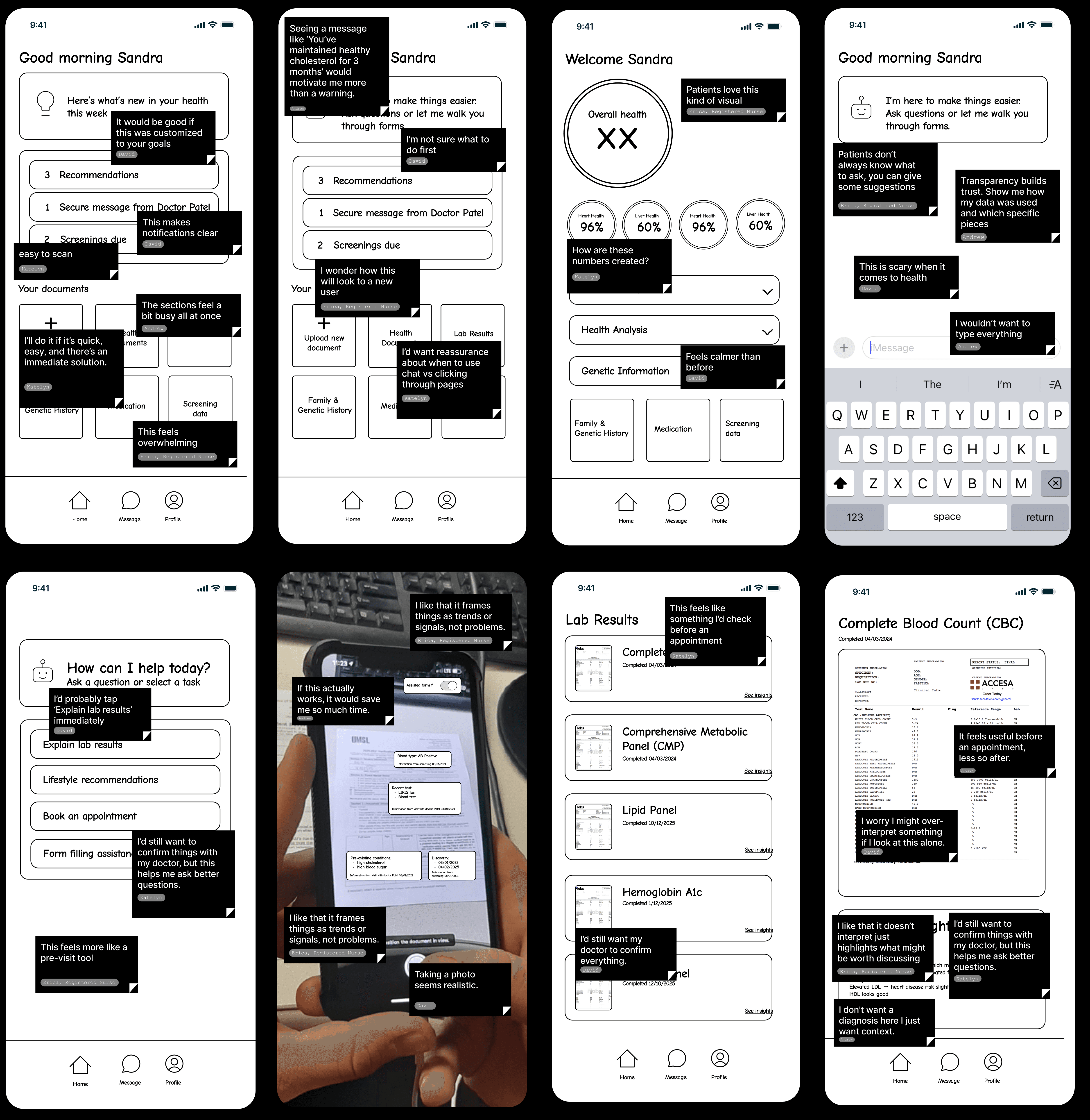
Interactive prototypes were tested with collaborators and fellow designers to evaluate clarity, navigation, and information density. Feedback highlighted the need for simpler language, clearer grouping of data, and stronger separation between raw data and summaries. Iterations focused on reducing friction and improving scalability.

High-fidelity prototype
Parameter’s high-fidelity prototypes are structured around three representative users with distinct health needs and engagement patterns. Each prototype walkthrough is anchored in one of these users, allowing the product to be evaluated across different levels of complexity, urgency, and data involvement. This approach ensures the system remains flexible and supportive without requiring heavy setup or sustained engagement, adapting naturally to changing health contexts while maintaining a consistent core experience.
High-fidelity prototype
Health information is organized by body systems and conditions, allowing users to move from a high-level dashboard into detailed views for genetics, heart health, and metabolic health. Clear status indicators, contextual explanations, and progress tracking help users understand what is on track, what needs attention, and why it matters, without overwhelming them. The experience emphasizes clarity, continuity, and user control, supporting both passive monitoring and active health management over time.
High-fidelity prototype
This experience is designed to reduce fragmentation and cognitive load in how people engage with their health information. By translating complex inputs into clear states, progress signals, and timely prompts, the system helps users feel oriented and in control rather than reactive or overwhelmed. It supports both everyday check-ins and deeper moments of care by making information easier to trust, revisit, and act on over time. The result is a calmer, more continuous relationship with personal health that encourages informed decisions and sustained engagement rather than one-off interactions.
Outcomes
The next phase would focus on usability testing with realistic health data, refining AI support boundaries, and exploring integration with existing healthcare systems. Additional work would include validating provider-facing considerations and further polishing interaction patterns and visual hierarchy to support scale and real-world use.
Next steps
Parameter established a clear system for organizing fragmented health information into a single, centralized profile. The prototypes demonstrate how complex medical data, daily inputs, and summaries can be presented with low cognitive load, supporting different user engagement levels while maintaining clarity, flexibility, and trust.