A platform tracking style inspiration through connecting screenshots, carts, and social feeds.
Timeline
6 Weeks (October-November 2025)
Scope
UX/UI Design, Art Direction
Tools
Figma, Adobe Creative Cloud, Midjourney, ChatGPT
Details
Client projects
Early insights
I began by studying how people save and revisit desired items carts, open tabs, screenshots, and saved posts. In Fashion Ecologies (2023), Kate Fletcher describes fashion’s shift from local, interdependent cultures to a dispersed global system. Building on this, I define style fragmentation as the decentralization of how we collect and organize taste. Fragmentation is no longer just about breaking things apart in today’s e-commerce landscape, it describes a systemic condition shaping how style is stored, discovered, and remembered.
Market research
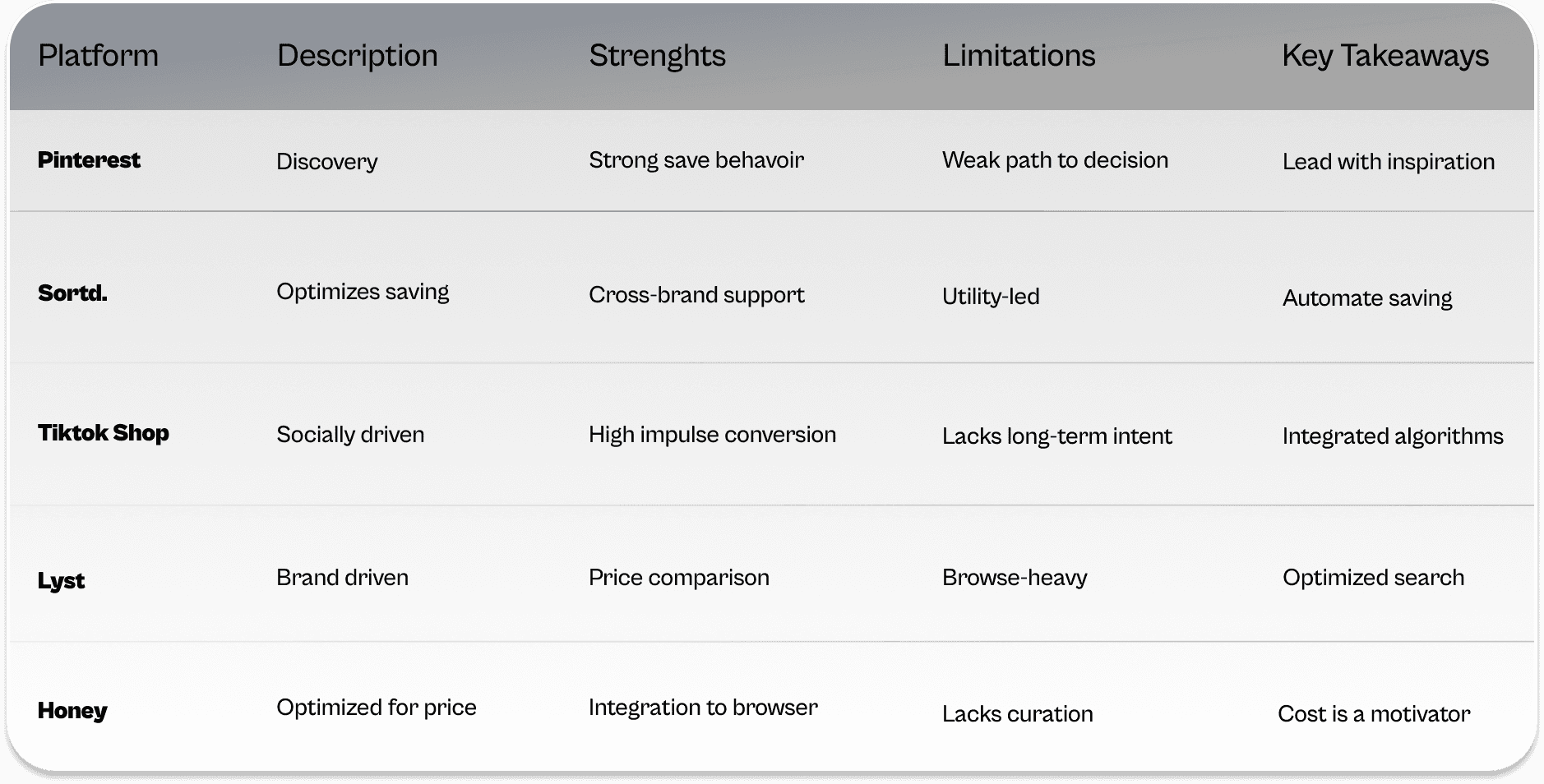
Commerce platforms specialize in either transaction or discovery. As a result, inspiration and purchase occur across disconnected systems, forcing users to manage their own continuity.
Research signals
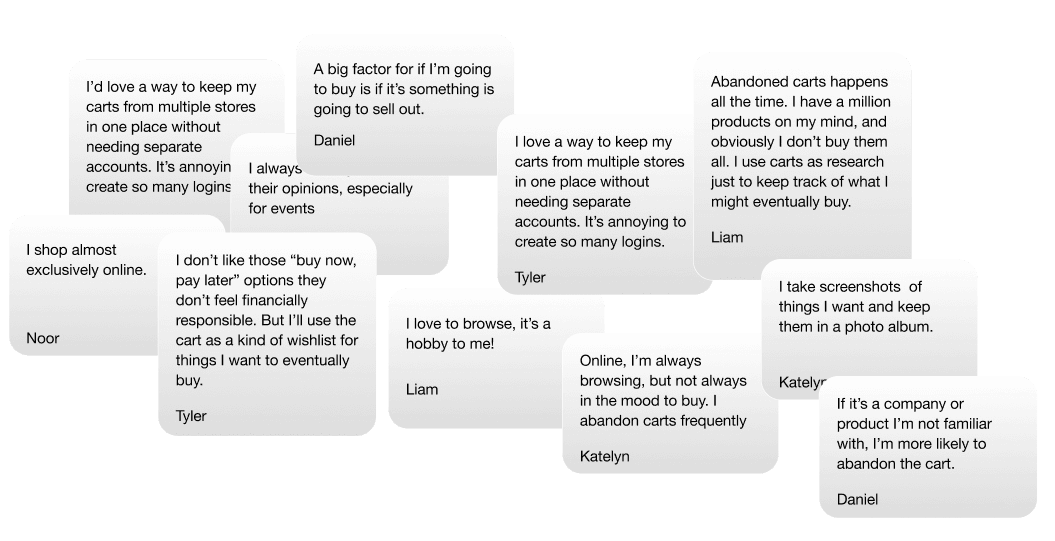
Users often use carts as a way to research and remember items, not as a commitment to buy. Higher priced items tend to stay in consideration longer. Many users care more about understanding their taste than receiving recommendations. Over time, algorithms can make discovery feel repetitive and impersonal.
Research synthesize
To better understand the market I compiled my research into the following areas :

Problem definition
To better understand the market I compiled my research into the following areas :
How might we
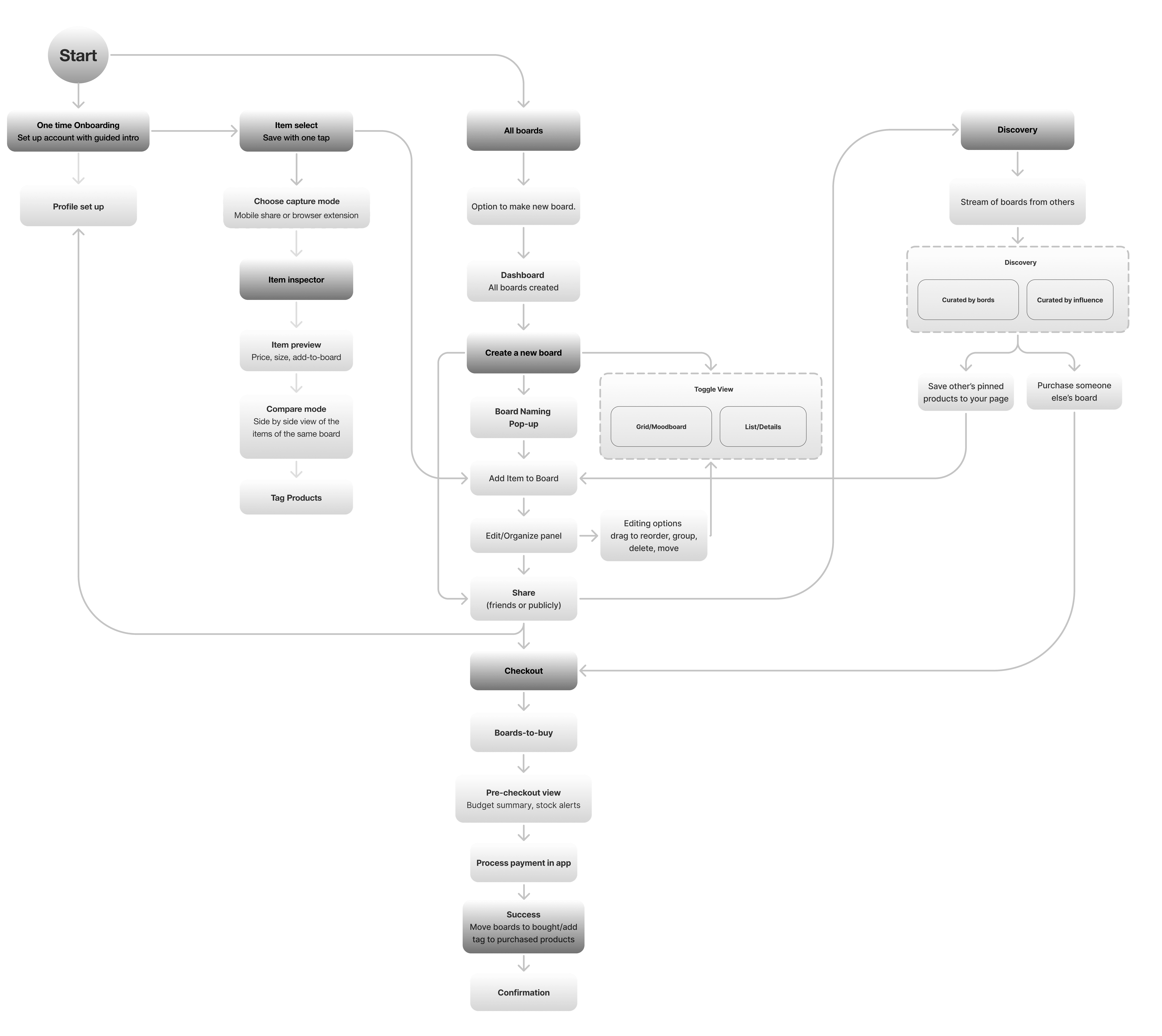
The architecture prioritizes persistence over transactional speed. Rather than optimizing for isolated purchases, the system is designed to preserve evolving user intent across time. Inspiration, organization, and checkout exist within a continuous framework that supports long, non-linear decision-making and durable tracking across boards.
Site map
The architecture prioritizes persistence over transactional speed. Rather than optimizing for isolated purchases, the system is designed to preserve evolving user intent across time. Inspiration, organization, and checkout exist within a continuous framework that supports long, non-linear decision-making and durable tracking across boards.
Sketches
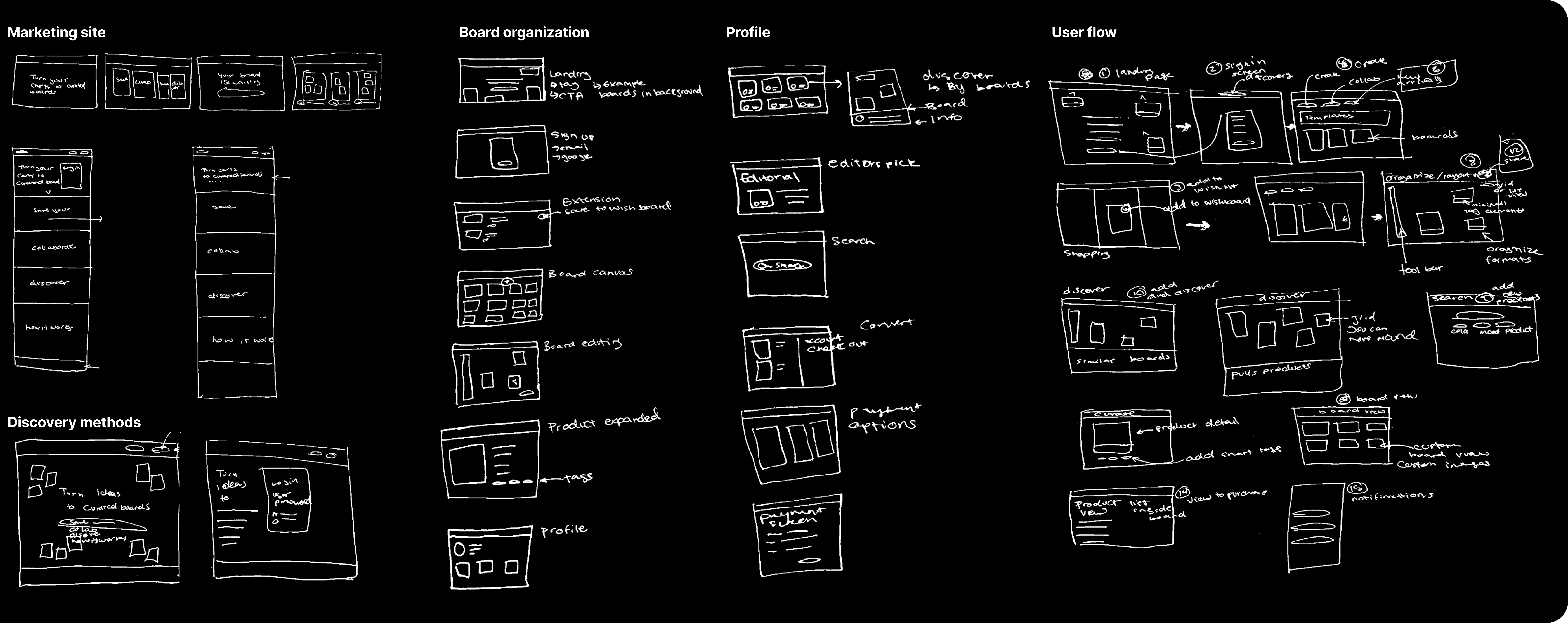
Sketches were used to quickly explore layout, hierarchy, and interaction ideas before moving into higher fidelity. This phase focused on helping clarify core flows and surface assumptions early.
Lofi Prototypes
Prototypes were used as collaborative tools to test assumptions, gather feedback, and align stakeholders around shared understanding. Through informal usability testing and peer reviews, key friction points and opportunities were identified and refined. Collaboration during this phase ensured the design evolved through multiple perspectives, balancing user needs, technical feasibility, and product vision.
Brand Styles
Typography, color, and layout decisions were grounded in core product values and user context, creating a consistent but flexible visual system designed to scale across features and states. Imagery operates as functional infrastructure , used selectively to guide attention, communicate abstract concepts, and reinforce narrative without competing with usability. The image system pairs branded, user, and product content into a cohesive editorial language, supported by AI-generated visuals to maintain continuity across the experience.
High-fidelity prototype
A single place to save products from anywhere online. Items are captured quickly and organized visually, replacing scattered screenshots, notes, and open tabs with a clear, structured system.
High-fidelity prototype
The experience supports different usage styles without requiring configuration. Users can casually save items, actively curate collections, or return only when ready to decide.
Outcomes
Cohesive, end-to-end product experience that clearly communicates value while remaining flexible for future iteration. The system brings together research insights, interaction design, and brand expression into a unified whole. The final prototype demonstrates a scalable foundation, validated through testing and collaboration, and is positioned to evolve alongside user needs.
Next steps
Add automated product integration make it easy to pull in items and content directly from e-commerce sites. Expand sharing features build collaboration tools and a more interactive style feed. Build out save from camera roll let users upload and organize their existing items.